A faculty is a team. Effective teams require a group of motivated, disciplined, creative, and qualified colleagues working together towards one goal. Roles and responsibilities must be clearly defined and the objectives (within timescales) must be clearly understood by everyone in the organization. The organization should be guided by a vision and a philosophy that undercuts all decisions and actions. Schools are no different.

Teachers, while guided by their own experience, qualifications, and philosophy, all share the same fundamental mission: to educate and to lead. They execute this mission in countless ways, each with their own style. Because teachers are masters of the skills and knowledge in their subjects and themselves embody the specific character that is required of their discipline, their own teaching styles naturally produce different learning targets for students. Some teachers are highly focused on the content of their subject, as they believe it is the foundation for further learning and provides a base of knowledge through which connections can be made. Some prefer to see themselves as mentors and deliberately act outside their traditional responsibilities, prioritizing pastoralism and the relationships they build with their students. Some act as coaches, drilling their students consistently to develop the tools needed to be master mathematicians, software engineers, historians, or artists.
Coupling the fundamental mission that all schools and teachers share with the individual approaches that exist naturally leads to friction. Add in the other influencing factors: community values, curriculums, administrative functions, cultural attitudes, and bureaucratic policy, and what could be a united yet differentiated organizational approach to learning becomes a mess of interweaving goals that pull teachers (and students) in opposite directions.
This is precisely where a whole-faculty approach must come to the fore. The first and foremost principle of teamwork is that the team must operate as one body, one entity. If one or more team members stray from the mission, at best the result is the failure of the mission, at worst calamity. As a student of history, I would be remiss to say that there are extraordinary examples of individual action contributing to the good of the team. Still, they are extraordinary for a reason. Both individually and professionally, I believe in process-driven approaches to solving problems. Results are the ultimate goal, yet a focus on the process builds a pattern of action that produces the desired results in the long term. This approach also means that team members only need to function in their roles in order for the goals of the team to be reached. As long as the team operates smoothly, success is bound to happen.
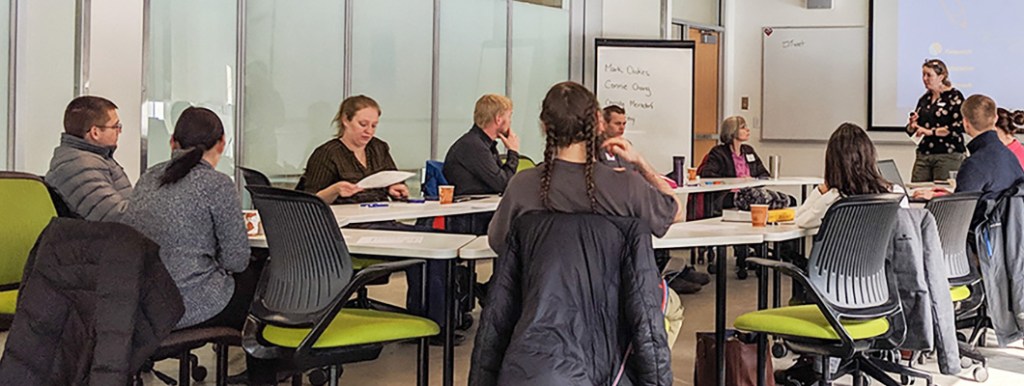
Within a school, there are several aspects of teamwork (read “faculty-work”) that are necessary for a robust educational culture. In this post, I will only focus on a select few: a uniting faculty philosophy, inter and intra-department mentoring, and strict adherence to curricular standards. All of these aspects should be nested within the broader mission of the school. The core theme of this post is alignment. Many teachers understand alignment as the through-line between standards, learning objectives, assessments, resources, activities, and plans. A teacher can and should do all of these things individually. But what if the idea of alignment was broadened to a whole faculty or school? What if teachers within a given school understood and acted on this mission daily? At its highest form, alignment of the 3 principles listed above means that any acute observer could trace the connections between the school’s mission and day-to-day instruction. Furthermore, the school’s mission should be observable in the philosophical approaches that individual teachers and departments use to achieve student learning targets. To this end, a faculty within a given school (primary, middle, or high) should share one fundamental vision, from which all decisions and actions taken in the classroom derive.
As mentioned above, no organization can function most effectively without a guiding philosophy. Taking you behind the curtain, this is partly why I wrote my personal teaching philosophy in the first blog post. By first clearly stating my philosophy, my teaching now has a barometer for success. If how or what I am teaching cannot be connected to my philosophy, I know I am not fulfilling my duties as an educator. All schools do have mission and vision statements. While not intended to be technically concrete, they often include statements that promise tolerance, life-long learning, rigorous curriculum, and academic excellence. These are admirable goals, and it is up to teachers and administration to ensure that these goals are pursued.

How many teachers actually know the mission statement of their school by heart? For that matter, how many people know their organization’s or employer’s mission statements? Most probably do not. Yet, if this is true then it cannot be expected that a school (or any organization) operates at its most effective. A faculty could do this simply by sitting down and writing out their philosophy. The procedure looks like this: First, each faculty member writes their individual teaching philosophy. They specify the highest and most idealistic form of a teacher and justify their individual teaching style/method. Then, as a department teachers pool those ideas together to create a “department” philosophy. This will highlight the relationship between the subject itself and the tailored teaching methods that educators in that subject believe are effective. They must write this department philosophy with the school’s mission and vision statements on hand and must integrate their individual philosophies within the school’s mission as they formalize their thoughts. When each department has finished, those departments should come together and do a similar exercise, where a school (eg. middle school, primary school, high school, etc.) philosophy is written that again connects to the mission statement. This sectional school “constitution” should attempt to tie the different methods and philosophies of each department together to create a holistic set of principles that inform decisions made in the classroom. At the end of this process, each school now has a stated list of principles that should cut through day-to-day instruction. In any class, in any subject, at any time, these principles should be observable. With this whole-faculty approach to teaching, learning can thrive.
Another crucial step to creating a true team of teachers is intra and inter-department mentoring. Here I will write specifically about the perspective of a teacher who has little to no experience in the field (myself). As is customary, to earn a teaching license (at least in the United States) one must undergo an “internship” working under a current full-time teacher. In doing so, the student-teacher begins to apply the theoretical frameworks from their university or teacher prep program and create practical lessons, units, and activities. With the internship completed, and assuming all goes well, the teacher will receive their license and will now enter the workforce full-time. Especially important for young teachers (and any teacher new to an institution) is that this mentoring does not stop once they have started their own practice. Typical teacher evaluations aside, it is my belief that young teachers should not only be assigned a mentor teacher from their department but should be evaluated by that mentor teacher based on the philosophical goals outlined by the faculty from the exercise above. This teacher should have extensive experience in the field and at the school itself. They should also be widely considered by colleagues and administration as an exceptional educator and instructional coach. Most importantly, the mentor teacher should be up-to-date on data-based teaching methodologies within the subject and will be tasked with the specific goal of accelerating the development of the new teacher.
The incoming teacher should also be coached on how to weave the shared philosophies of the faculty into their own teaching practice. This can be done by the mentor teacher or subject leader in their department, yet it would be more beneficial if this instructional coach comes from outside the subject. The extra-disciplinary feedback from teachers from outside the mentee’s subject further promotes the integration of the school’s vision and also strengthens the personal bonds between faculty members. This is a vital step in creating an educational culture that actively upholds the mission of the school. Truly long-term successful organizations are those that develop a culture that persists despite environmental challenges and member turnover. As new technologies continue to accelerate change in the field of education, and the pool of qualified teacher candidates continues to shrink1, it is incumbent on school administrations to develop and maintain a deep-rooted ethos. If incoming teachers are consistently mentored and coached in their practice, and the school itself is instituting a faculty-wide approach to teaching, a true school culture is created. When the culture is created, this will not only encourage teachers to stay but will entice new and highly qualified teachers to join as well, further strengthening the quality of learning. When the quality of teaching and learning improves, student outcomes and engagement improve alongside it.

Now that the faculty has established a commonly agreed-upon philosophy and established mentorships for new and incoming teachers, the work of teaching can begin. This work lies within the standards themselves and strict adherence to them is by far the most difficult of the 3 strategies outlined in this post to achieve. One could argue it is one of the most difficult aspects of teaching in general. Standards get a bad rap and undeservedly so. To roughly paraphrase Jennifer Gonsalez of The Cult of Pedagogy Podcast, standards are often beautifully written, but teachers simultaneously fail to organize lessons in a way that effectively guides students to acheive said standards. There are many reasons for this as teachers know full well, yet it is also the case that if our students really could demonstrate their mastery of those standards, then we would observe monumental and dramatic growth, not to mention the reward we teachers would feel.
So how does this adherence happen? One way is through collaborative planning. When teachers collaborate, it ensures several things. First, it ensures that teachers are truly upholding curricular standards, as having more than one set of eyes on the planning process naturally leads to greater accountability and clearer plans of action. Second, it means that the previously negotiated department goals are closely targeted and those goals can manifest in more effective lesson planning. These effective lessons center around clearer lesson objectives, which improves the chances for students to show understanding when assessing for the acquisition of knowledge. As with any project, if the goals are clearly stated than the road map to reaching said goal becomes clearer. Collaborative planning also means that compromises are made in the planning process and instead of a department where standards are taught simply based on the individual teacher’s approach, these styles are now melded. This leads to greater consistency in the pedagogical approaches between different teachers in a department, meaning students are assessed on similar objectives. The nuances that come from each teacher’s style can still be implemented, however, the emphasis on collaboration means the strategies are collectively implemented. It also means a pedagogical culture is established across the department, promoting a sense of shared accountability for the academic success of students. When everyone is on the same page, the department (and the whole faculty for that matter) moves together on that path towards adherence to curricular standards.

To summarise, a true faculty is a faculty that has aligned the school’s vision with departmental pedagogies and individual teaching styles. Teachers are part of a team, an organization. The success of those teachers and of that organization traces back to the ability of that team of teachers to successfully impart the school’s vision to their students. Essentially, each teacher and department of teachers should nest their educational philosophies and practices within the organizational structure that aims to realize the vision of the school. When each and every lesson, test, project, and unit, can be connected to the teacher’s practice, within a departmental set of goals, bounded by a faculty-wide philosophy and linked to the school’s vision, a true faculty is born.
- Lonas, Lexi. “Declining Education Degrees Compound Problems in the Classroom.” The Hill, July 28, 2023. https://thehill.com/homenews/education/4121008-declining-education-degrees-compound-problems-in-the-classroom/.
↩︎
 Tony Teaches